

An ounce of prevention is worth a pound of cure.
While striving to reduce the time and cost of production, manufacturers and carriers might inadvertently overlook potential performance and maintenance problems with their assets and equipment.
Yet, an unexpected breakdown can result in costly interruptions to business operations and customer commitments.
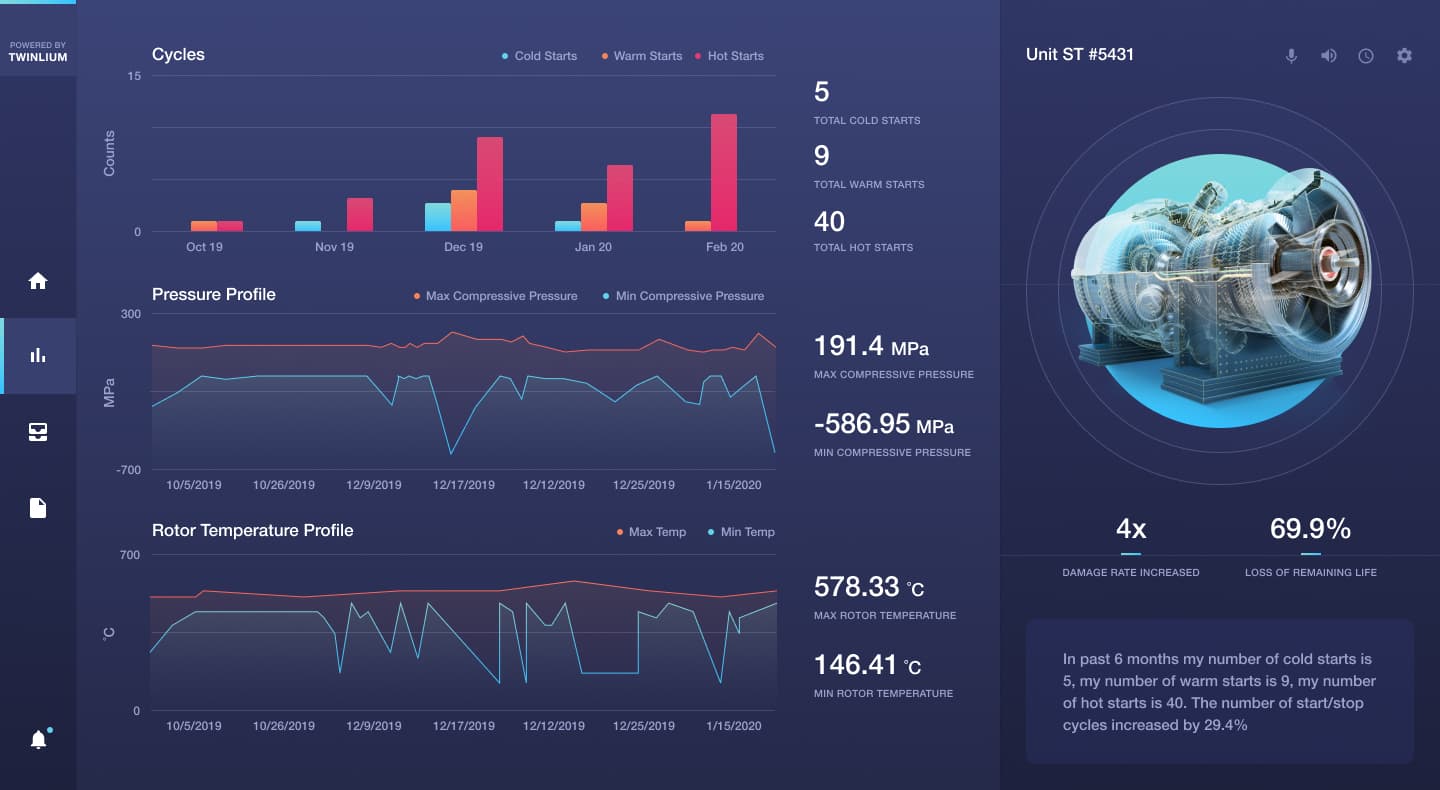
To solve this problem, Twinlium brings together predictive manufacturing and predictive maintenance capabilities using digital twins of assets and equipment.

Twinlium is a digital twin platform built around a shared model of a sensor-enabled asset or piece of equipment. This model enables performance monitoring and helps prevent unplanned breakdowns.
It collects and analyzes data about equipment efficiency, schedules optimal maintenance, predicts remaining life, and helps control long-term operational costs.
Digital twins uncover undesirable performance tendencies and their causes in ways conventional analysis cannot easily reveal.
Twinlium determines an optimal set of actions to maximize key performance metrics and support long-term planning across real and virtual assets.
Predicts asset behavior (conditions, failures, remaining life) with the help of machine learning.
Identifies optimal maintenance activities based on a detailed understanding of both historical and current asset conditions and costs.
Detects root causes of failures faster thanks to advanced analytics.
Is IoT platform-agnostic.
Derives actionable insights from limited data and without additional sensors.